
Jeulia United Kingdom

Gold Jewelry

Gold jewelry holds a unique and enduring position in the cultural and economic fabric of the United States, serving as a powerful symbol of love, achievement, and personal expression. From the timeless promise rings embodied in an engagement ring to the celebration of milestones like graduations and retirements, gold jewelry are often chosen as heirlooms meant to last generations. The market of gold jewelry is vast and diverse, catering to every taste with a spectrum of hues, including classic yellow gold, luxurious rose gold, and modern white gold, each alloyed for durability and style.
 | 48 Items
Product Image Placeholder
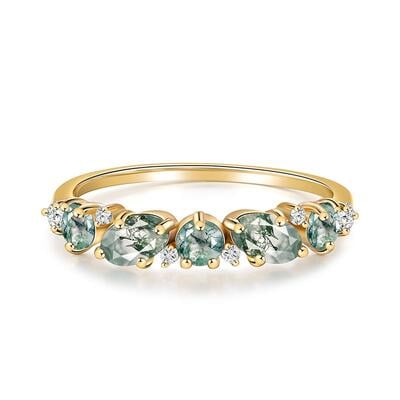
Jeulia Irregular Moss Agate Gold Wedding Band
Product Image Placeholder
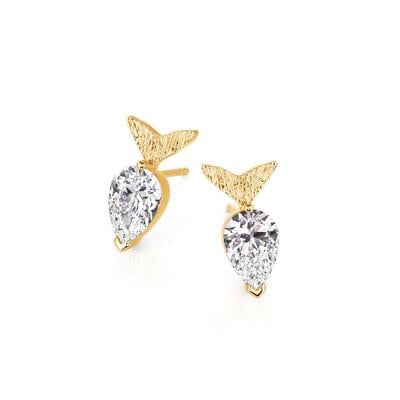
Jeulia Playful Fish Custom Birthstone Stud Earrings
$99.00
Add to Cart
Product Image Placeholder
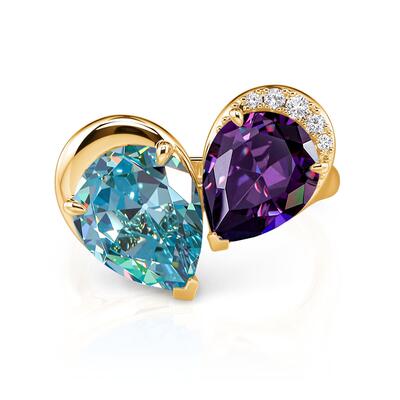
Jeulia Elegance Double Pear Toi et Moi Cocktail Ring
$175.00$225.00
Add to Cart
Product Image Placeholder
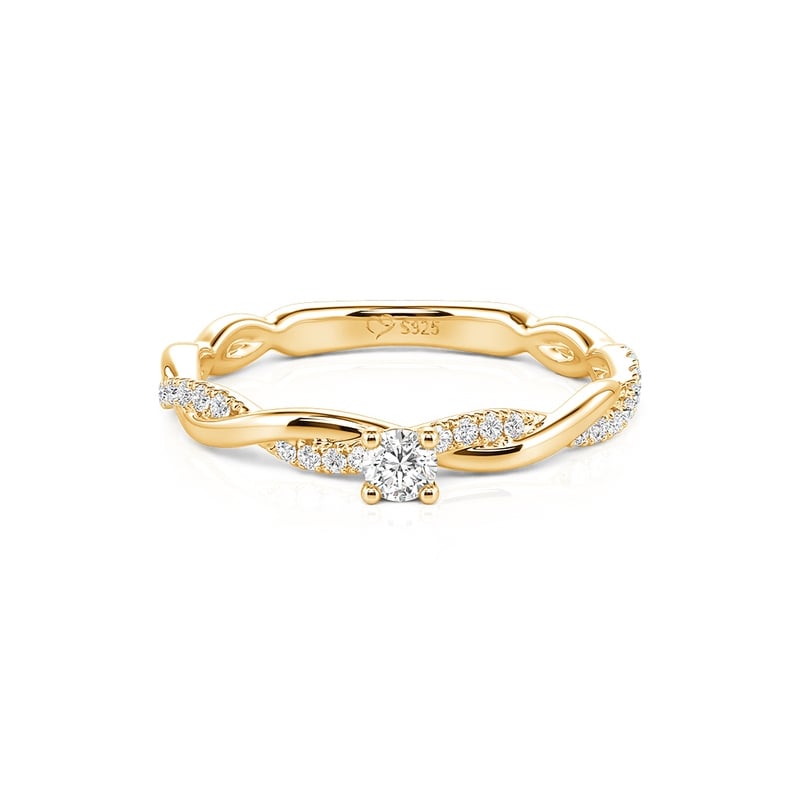
Jeulia Minimalist Twist Round Cut Engagement Ring
Product Image Placeholder
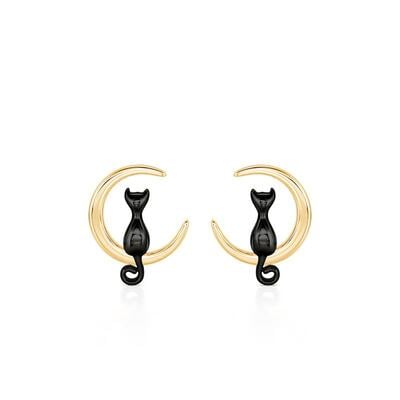
Jeulia Black Cat and Moon Gold Stud Earrings
Product Image Placeholder
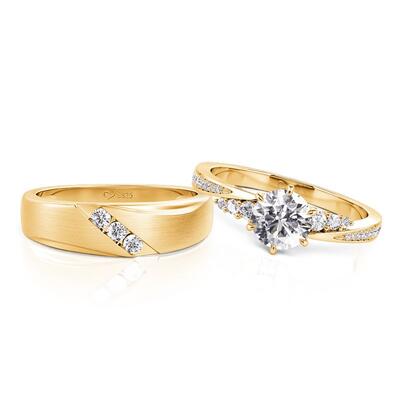
Jeulia Classic Twist Gold Matching Couple Rings Set
$268.00$348.00
Add to Cart
33% OFF
Product Image Placeholder
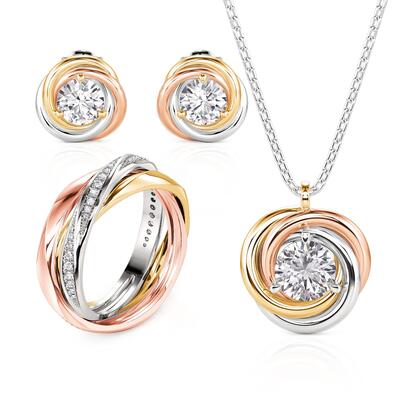
Jeulia Tricolor Trinity Jewelry Set Sterling Silver
$389.00$578.00
Add to Cart
Product Image Placeholder
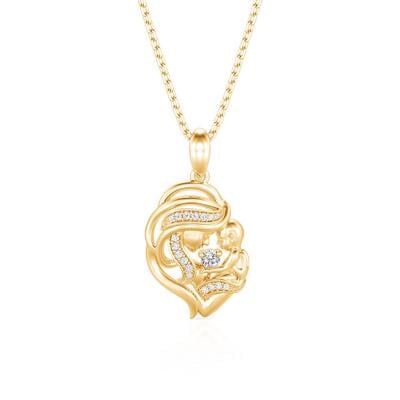
Jeulia Custom Birthstone Gold Mother and Child Necklace

Gold Jewelry FAQ

What does karat mean in gold jewelry?

Karat (K) is a measure of the purity of gold. It indicates how many parts out of 24 are pure gold. 24K: 100% pure gold (24 parts gold out of 24). Too soft for most jewelry. 18K: 75% pure gold (18 parts gold, 6 parts other metals). 14K: 58.3% pure gold (14 parts gold, 10 parts other metals). 10K: 41.7% pure gold (10 parts gold, 14 parts other metals). The higher the karat number, the purer and generally more expensive the gold. Lower karat gold is more durable due to the presence of harder alloy metals.

What's the most common karat for gold jewelry in the US?

14K gold is the most popular choice for gold jewelry in the US. It offers a good balance of durability, value, and gold content. 10K is also very common, especially for more casual or budget-friendly pieces, and 18K is seen in higher-end or designer jewelry.

What's the difference between yellow, white, and rose gold?

The color of gold jewelry depends on the alloys (other metals) mixed with pure gold. Yellow Gold: Pure gold naturally has a yellow hue. It's alloyed with silver and copper to increase durability while maintaining its warm tone. White Gold: Created by alloying pure gold with white metals like palladium, nickel, or silver. Most white gold jewelry in the US is also plated with rhodium to give it a brighter, whiter finish and added durability. This plating may wear off over time. Rose Gold: Made by alloying pure gold with a higher percentage of copper, which gives it its distinctive reddish-pink hue. Some silver is also often added.

What's the difference between solid gold, gold-filled, and gold-plated?

Solid Gold: The entire piece is made of a gold alloy (e.g., 14K, 18K), meaning it's gold throughout. It's the most valuable and durable. Gold-Filled: A thick layer of gold (at least 5% of the item's total weight) is mechanically bonded to a base metal (usually brass or copper). It's much more durable and resistant to tarnish than gold-plated, and can last for decades with proper care. Gold-Plated: A very thin layer of gold is electrically deposited onto a base metal. It's the least expensive option, but the gold layer is prone to scratching, wearing off, and tarnishing fairly quickly.

How can I tell if my gold jewelry is real?

Look for a Karat Mark (Hallmark): This is the strongest indicator. It will typically be stamped on the clasp, inside a ring band, or on the back of a pendant. In the US, it will usually be 10K, 14K, 18K, or 24K. International pieces may use numerical stamps like .417 (10K), .585 (14K), .750 (18K), or .999 (24K). Magnet Test: Gold is not magnetic. If your jewelry strongly sticks to a magnet, it's not pure gold (or possibly not gold at all). Weight Test: Gold is a dense metal. If a piece feels surprisingly light for its size, it might be fake or hollow. Professional Appraisal: The most reliable method is to have a reputable jeweler examine and test the item. They can use acid tests or X-ray fluorescence (XRF) scanners.

What should I look for when buying gold jewelry?

Karat Mark: Always check for an official karat stamp (e.g., 14K, 18K, .585 for 14K, .750 for 18K). Manufacturer's Mark: A small symbol or initial identifying the maker is often present. Quality of Craftsmanship: Inspect for smooth finishes, secure settings for any gemstones, sturdy clasps, and good weight. Return Policy & Warranty: Ensure the retailer offers a reasonable return period and a warranty against defects. Appraisal or Certificate of Authenticity: Especially for higher-value pieces or those with gemstones.

What are common US hallmarks for gold?

In the US, common hallmarks (stamps) for gold purity include: 10K or 10KT, 12K or 12KT (less common for finished jewelry), 14K or 14KT, 18K or 18KT, 22K or 22KT (less common), 24K or 24KT (often for bullion or very soft, specific items). You might also see numerical marks indicating the percentage of gold: .417 (10K), .583 or .585 (14K), .750 (18K), .916 (22K), .999 (24K). Many pieces will also have a manufacturer's mark.

How should I store gold jewelry?

Store each piece separately in a soft cloth pouch, a jewelry box with compartments, or wrapped in a soft cloth. This prevents scratching and tangling, especially between different metal types. Keep it in a dry, cool place away from direct sunlight.

Where can I sell my old or unwanted gold jewelry in the US?

Local Jewelers: Many reputable jewelers buy scrap gold or take trade-ins. Gold Buyers/Refiners: Businesses specializing in buying gold for its melt value. Pawn Shops: Often buy gold, but may offer lower prices due to their business model. Online Gold Buyers: Research carefully and ensure they are reputable, offer competitive rates, and have clear processes (e.g., insured shipping). Auction Houses/Consignment Shops: For unique, antique, or designer pieces, this might yield a better return for the design value, not just melt value.

Is gold jewelry a good investment?

While gold often holds its value and can act as a hedge against inflation, gold jewelry is generally not considered a primary investment vehicle. The retail price of jewelry includes significant markups for design, brand, labor, and profit, which you won't recover when selling for scrap. For investment purposes, gold bullion (coins or bars) is usually preferred.

Gold Jewelry

Gold's appeal is no accident. Its brilliant, warm glow complements all skin tones, making it a universally flattering choice. It’s incredibly durable and doesn’t tarnish, rust, or corrode, meaning a piece of gold jewelry you buy today can be worn and adored for a lifetime. In the US, gold jewelry is deeply woven into our cultural fabric:
Sentimental Value: Engagement rings, wedding bands, christening bracelets, and milestone birthday gifts are often crafted in gold, symbolizing love and commitment that, like the metal itself, is meant to last.
A Form of Investment: While you should always buy jewelry you love, gold has intrinsic value. It’s a tangible asset that can be a smart part of a diverse portfolio, especially during times of economic uncertainty.
A Statement of Style: Whether you’re drawn to the minimalist chic of a simple gold chain or the bold artistry of a statement cocktail ring, gold jewelry is a versatile tool for self-expression.
The American gold scene is wonderfully diverse, blending classic with contemporary.
The Layered Look: Don’t choose just one necklace! Layering delicate chains of varying lengths and styles is a huge trend. Mix a simple bezel pendant with a personalized nameplate and a vintage-inspired locket for a curated, personal effect.
Statement Hoops: From thin and minimal to large and sculptural, hoops are a forever favorite. They instantly elevate any outfit, from a simple t-shirt to an elegant evening gown.
Chunky Chains: Inspired by both 70s glam and 90s nostalgia, bold link chains and bracelets are making a major comeback. They’re a confident, stand-alone piece that commands attention.
Personalized Pieces: Jewelry that tells your story is more popular than ever. Stackable rings with initials, bracelets with birthstone accents, and custom-engraved pendants allow you to wear your history close to your heart.
Sustainable & Vintage: Modern consumers are increasingly seeking out vintage, antique, and ethically sourced gold jewelry. There’s a growing appreciation for the unique craftsmanship and story behind a piece from another era.
Read More